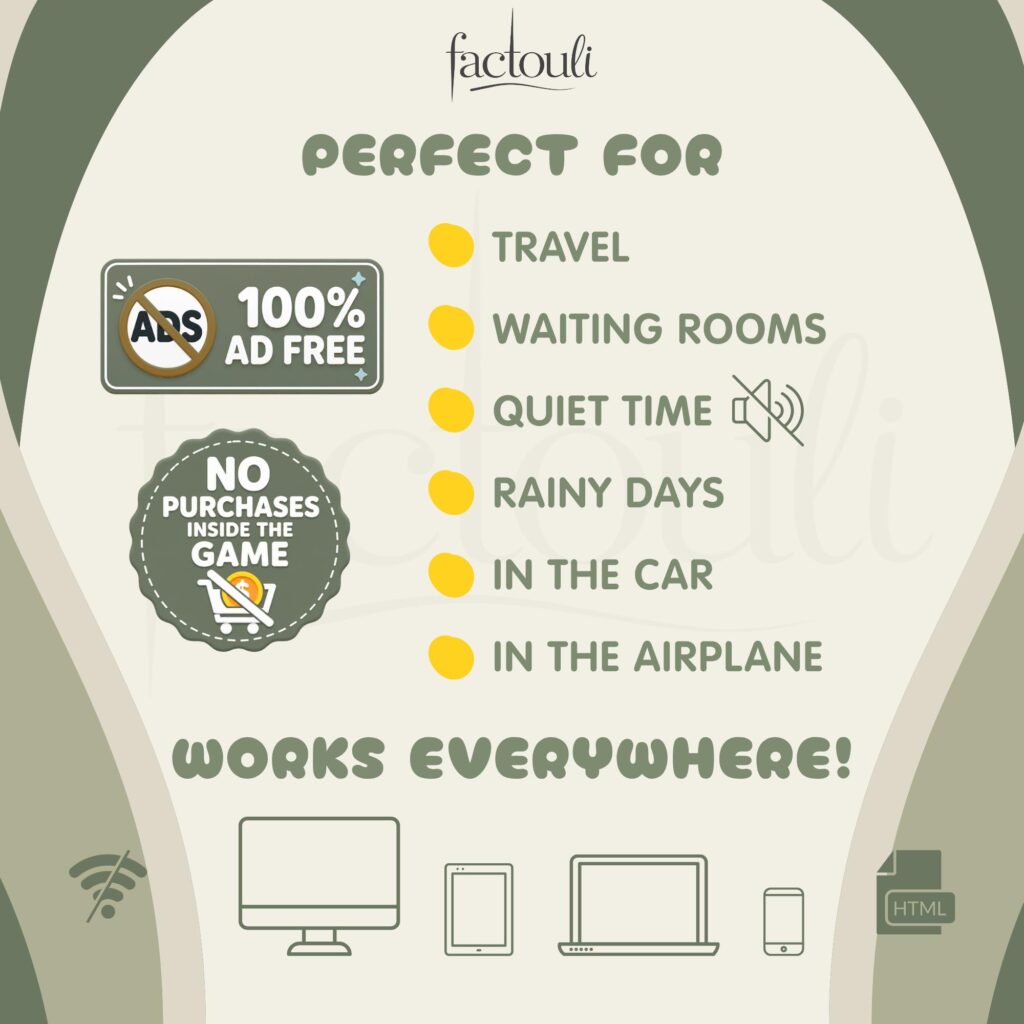
The problem with most kids’ games is that they’re designed to keep kids tapping. They have ads between levels, buttons that cost money, and nothing works without an internet connection.
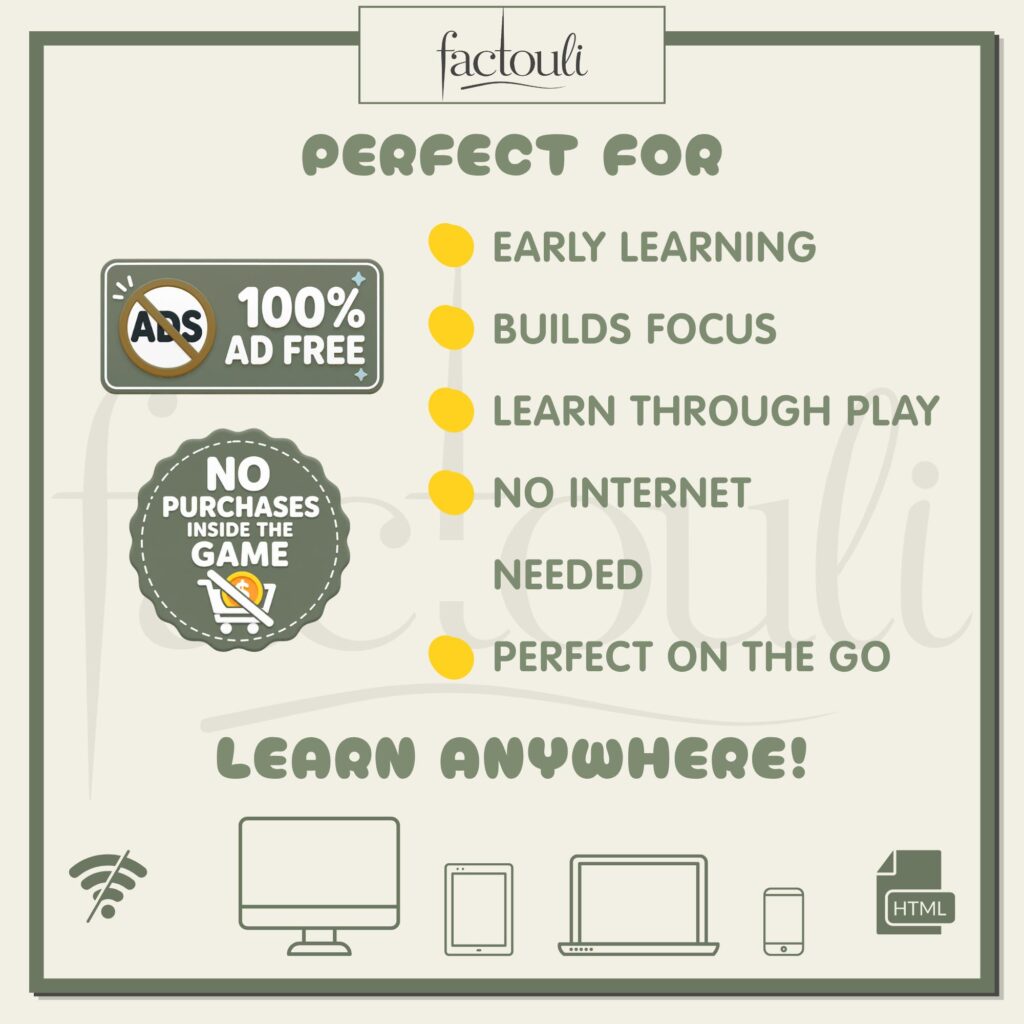
Our games don’t do any of that. You only need to download them once, and they run on a phone, tablet, or computer offline with no ads or in-app purchases. Hand over the device and walk away.
Every game is built around an activity worth practicing, so the time spent playing is worthwhile.
Not sure how HTML games work on your device? Here’s how to open one.
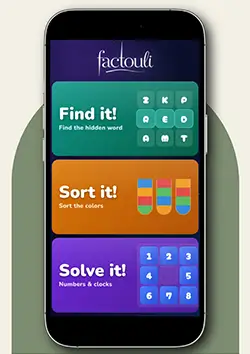
For children who are past the basics and ready to be challenged.
These need a bit of reading, a bit of counting, and above all the patience to think a move ahead before tapping.
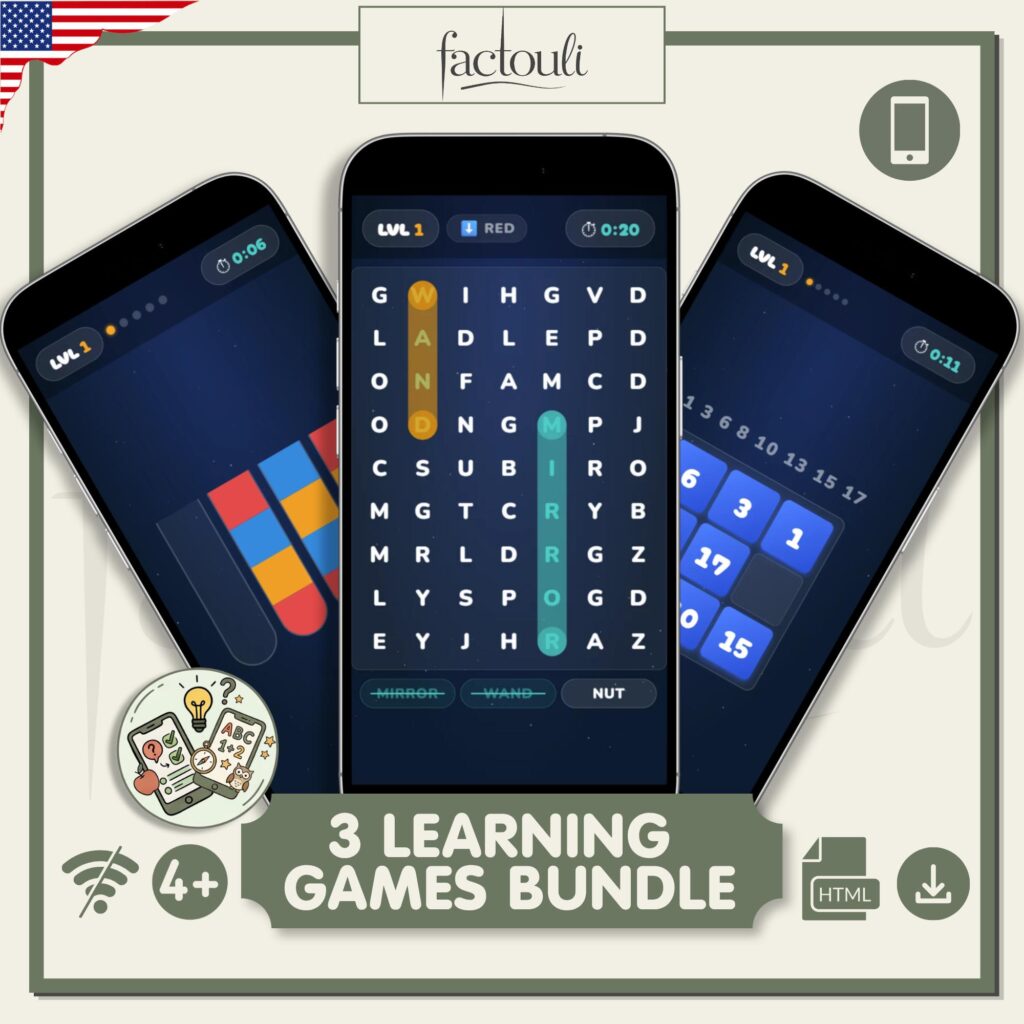
Three games that ask your child to slow down and think, each one built around a different kind of problem.
Find It!
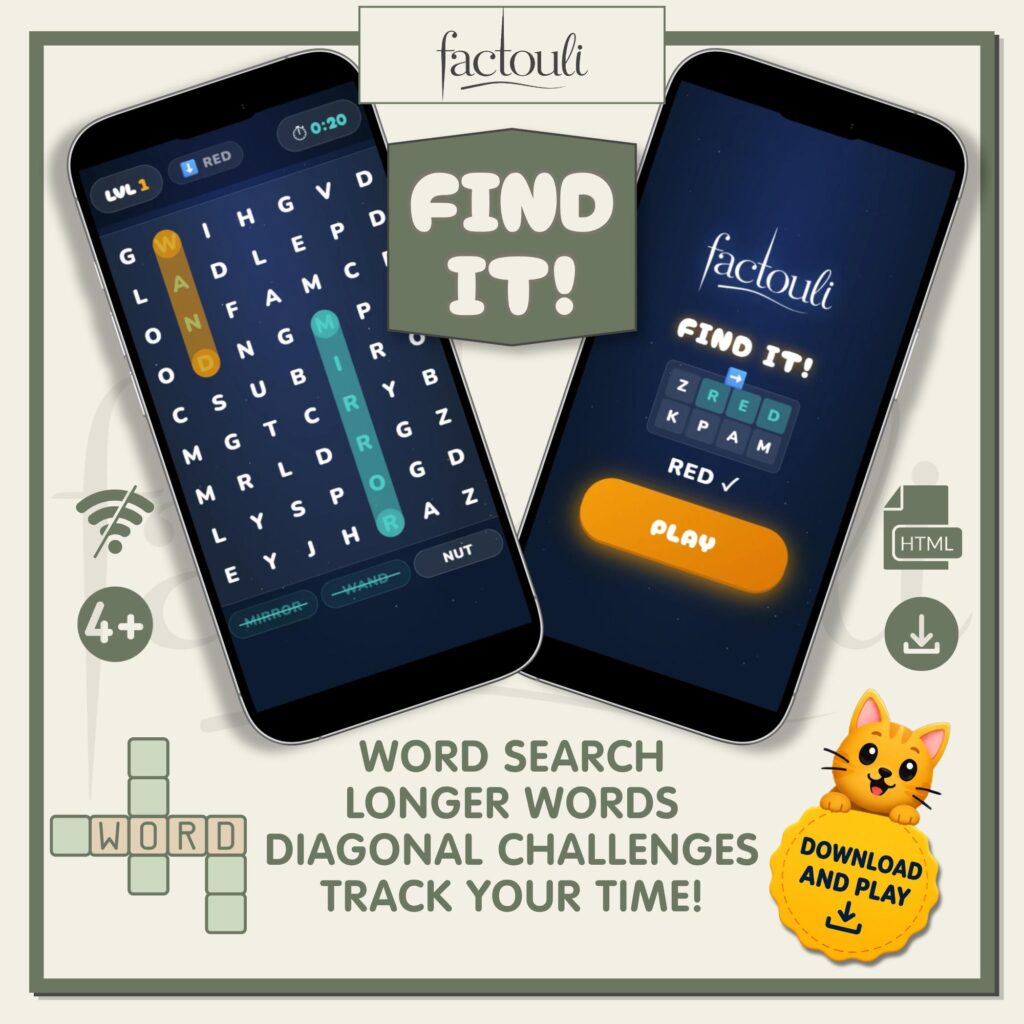
Words are hidden in a grid of letters, and your child has to spot them among everything else. It starts with short, familiar words and grows from there, so reading and vocabulary get a workout without anyone calling it practice.Color Sort!
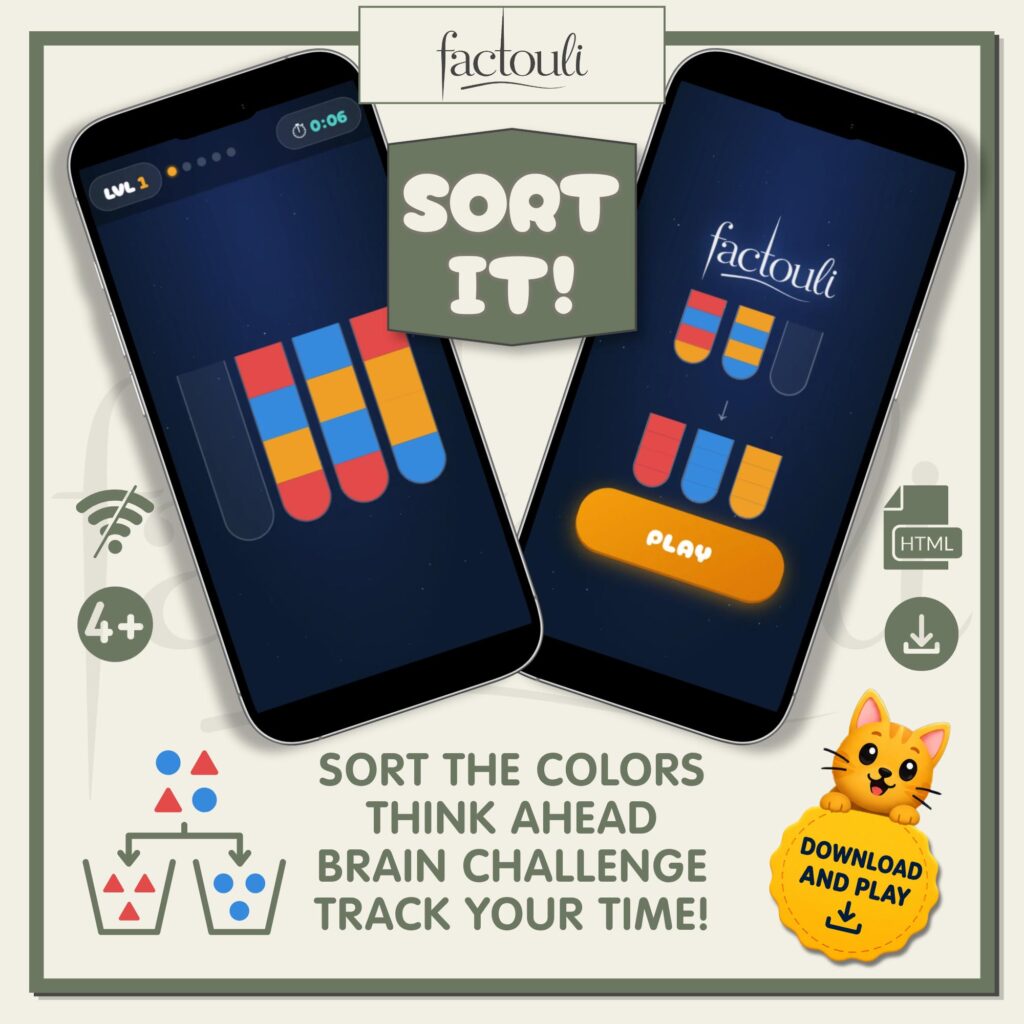
Colors are mixed across tubes and have to end up sorted. There is no way to rush it, because one wrong move blocks the next one. Children quickly learn to look at the whole board before touching anything, which is exactly the point.Solve It!
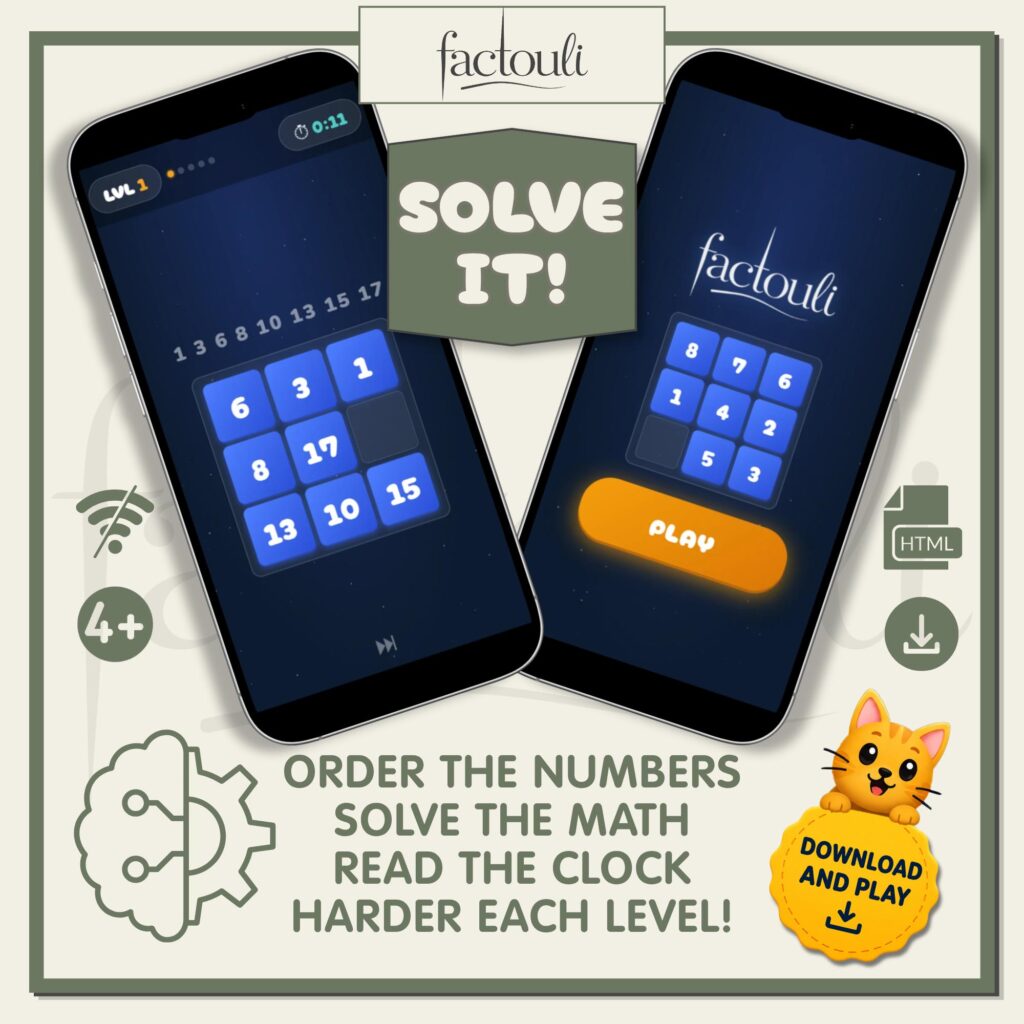
Numbers to put in order, small calculations to work out, and clock faces to read. It turns the parts of maths that usually feel like homework into something closer to a puzzle.Nothing repeats in the same way twice, and there is always a next level waiting. They run without a connection, without ads and without anything to buy inside.
Download once and play as often as your child wants.
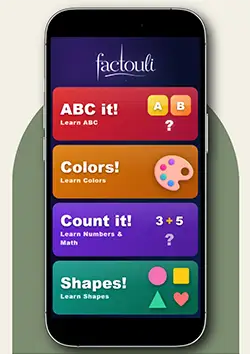
For children meeting letters, colors, numbers and shapes for the first time.
Nothing here assumes your child can already read, and every game is short enough to finish before attention runs out.
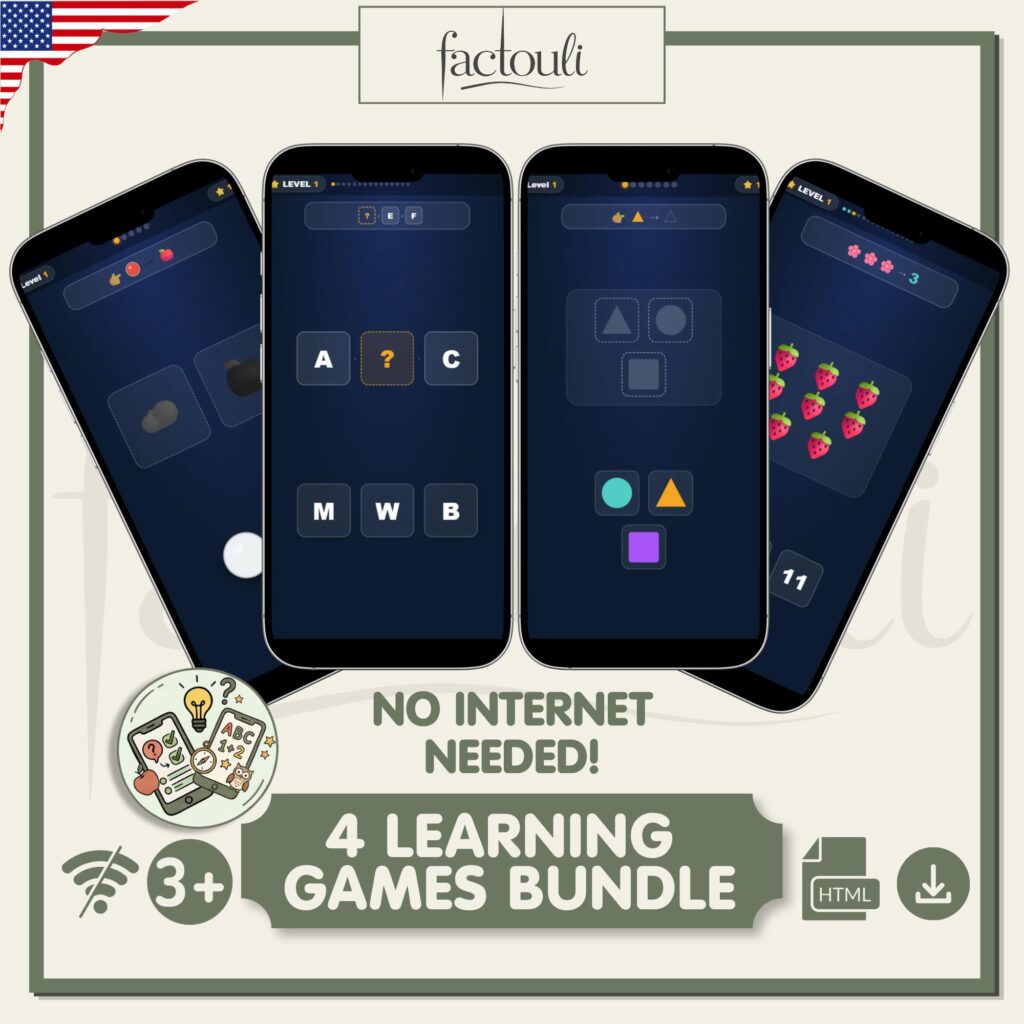
Four games for children who are just starting out.
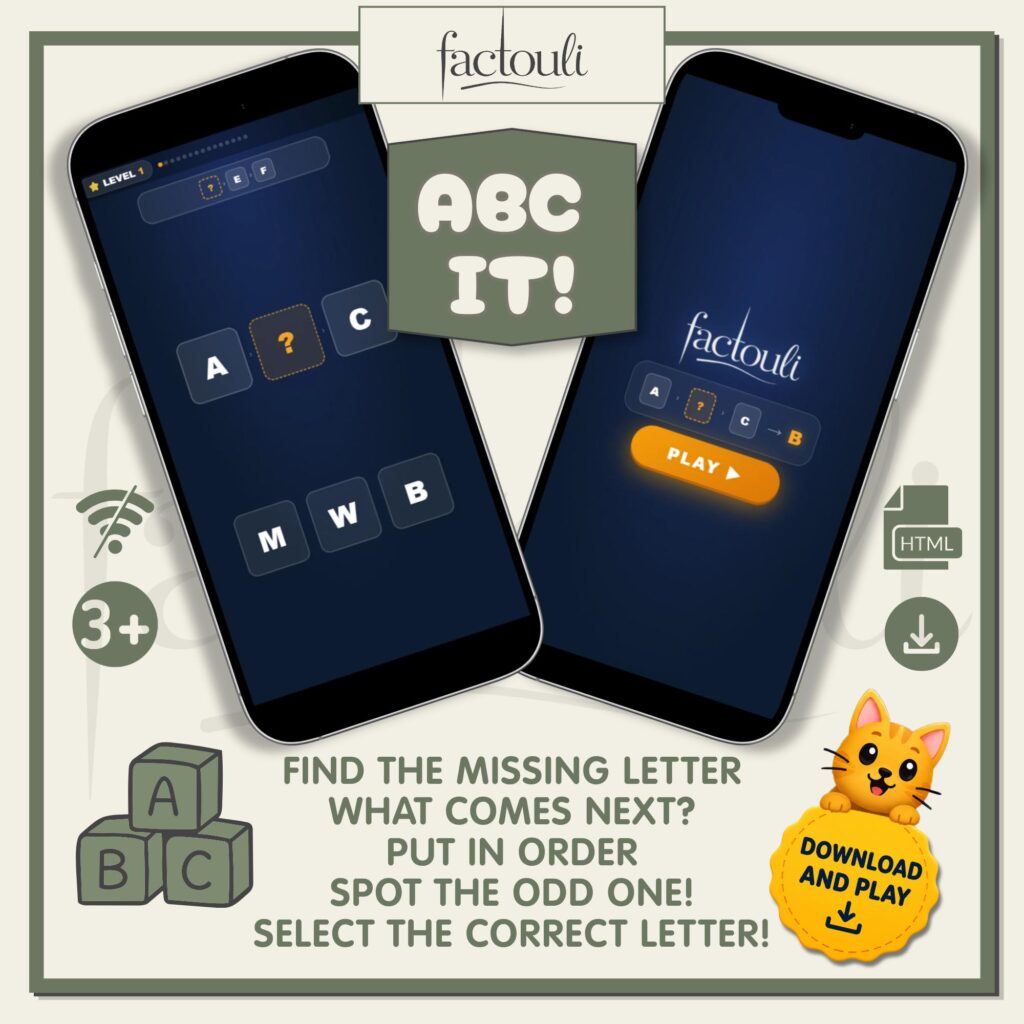
ABC!
Letters go missing and have to be found, sorted and matched back into place. It’s the alphabet handled as a small puzzle rather than a list to recite, which is usually the difference between a child who joins in and one who wanders off.Colors!
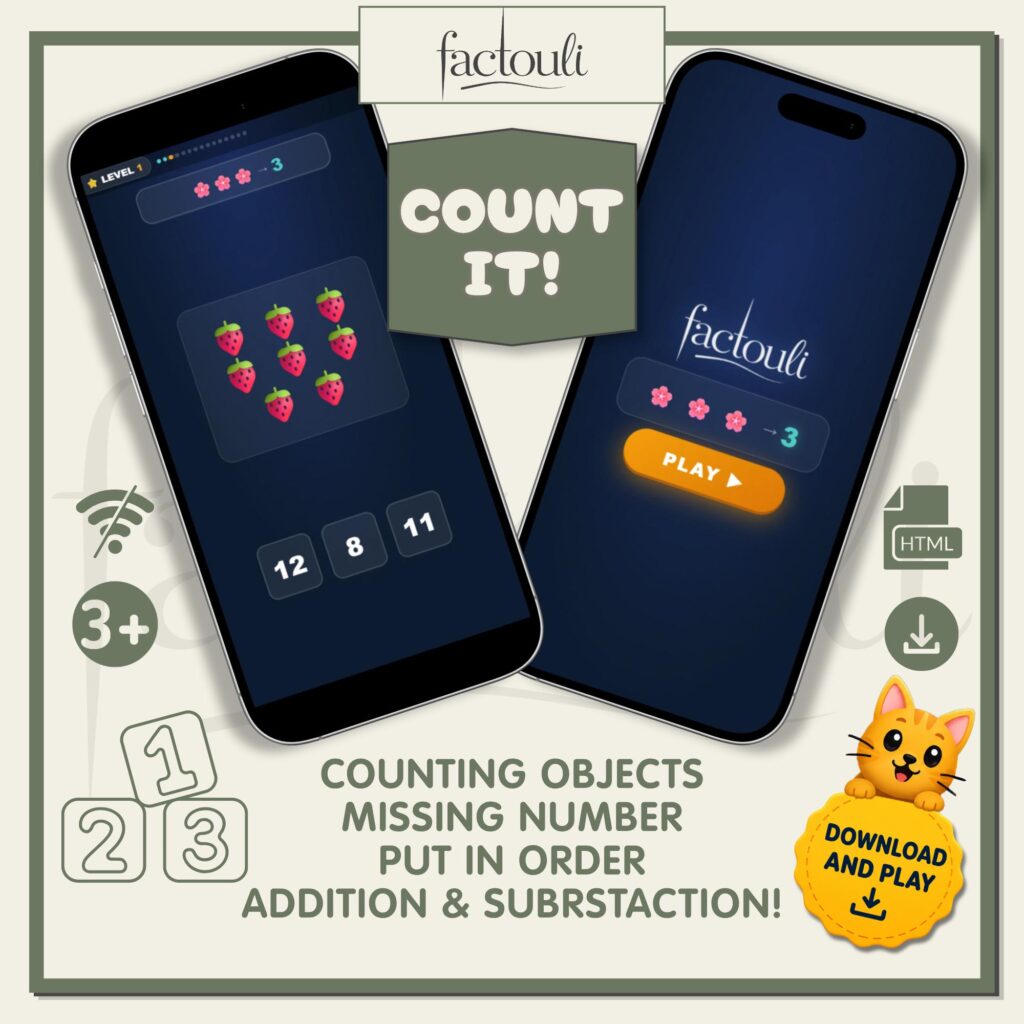
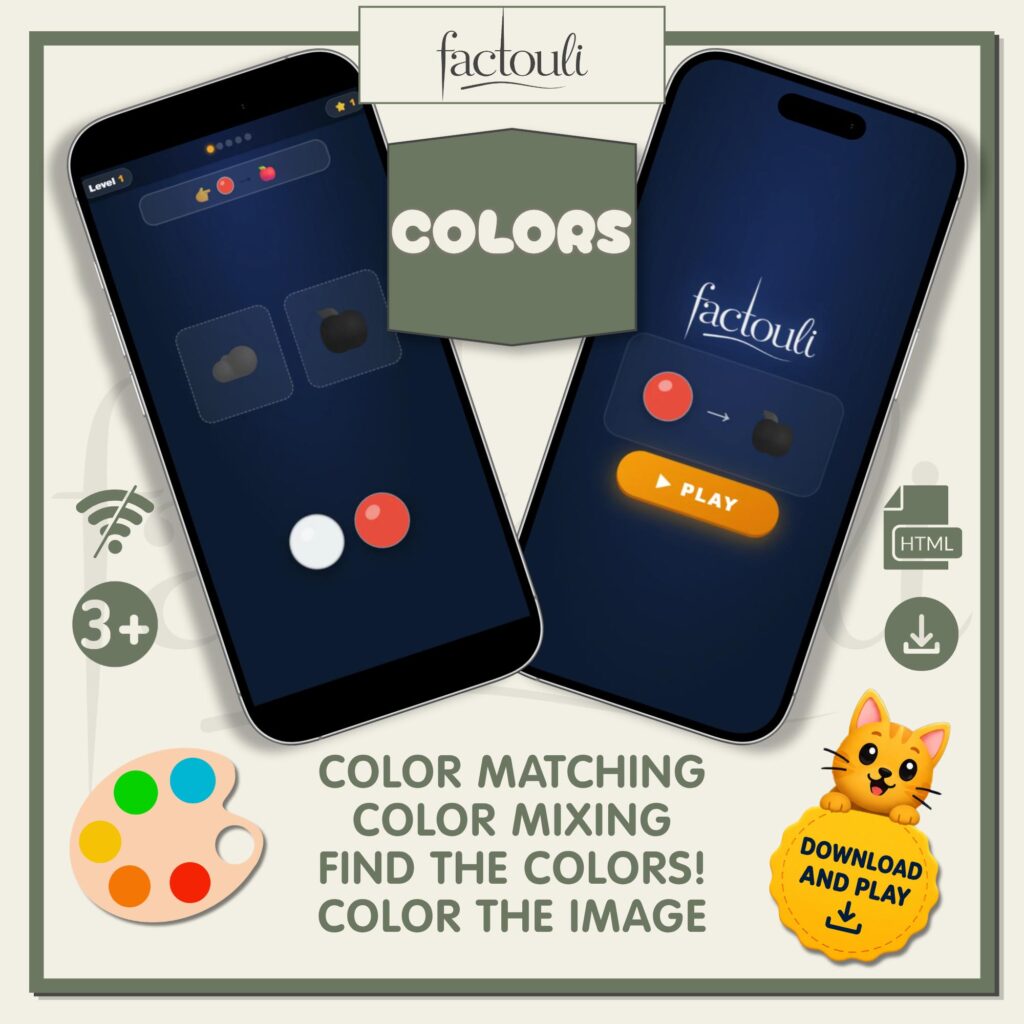
Matching first, then mixing, then painting a picture with what they’ve made. Children discover on their own that two colors make a third, which lands better than being told.Count it!
Numbers to count, to sort and eventually to add together. It moves at the pace of a three-year-old, with nothing to read and nothing to type.Shapes!
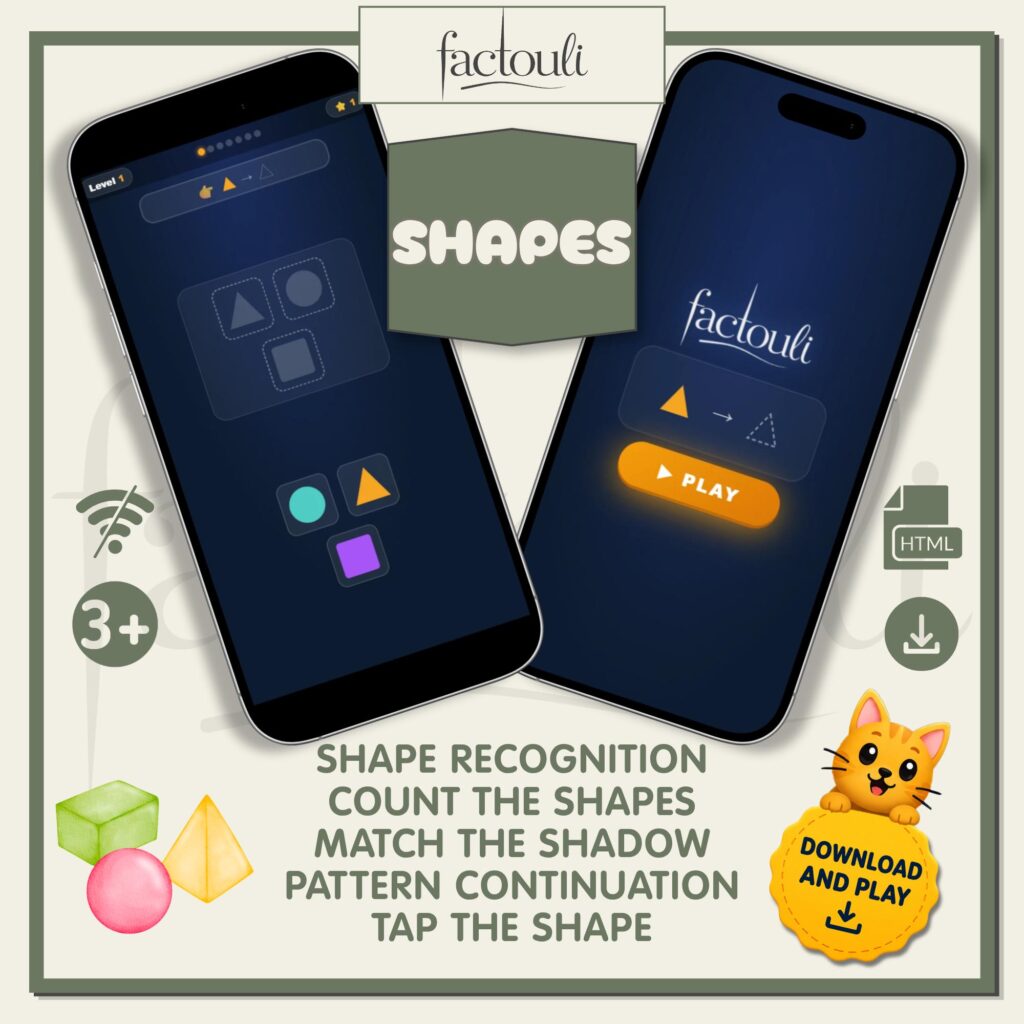
Circles, squares and triangles to spot, count and tap. The kind of practice that comes up again on the first day of school.Everything is built for small hands and short patience. No timers, nothing that punishes a wrong tap. They run without a connection, without ads and without anything to buy inside.
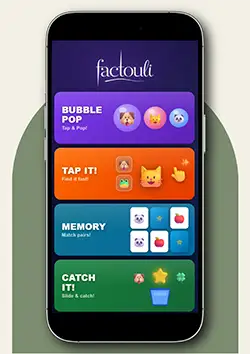
For children who just want to play.
There is nothing to learn by heart here, but reflexes, focus, memory and coordination all get their turn along the way.
Four games with nothing to learn by heart, but plenty going on underneath.
Bubbles
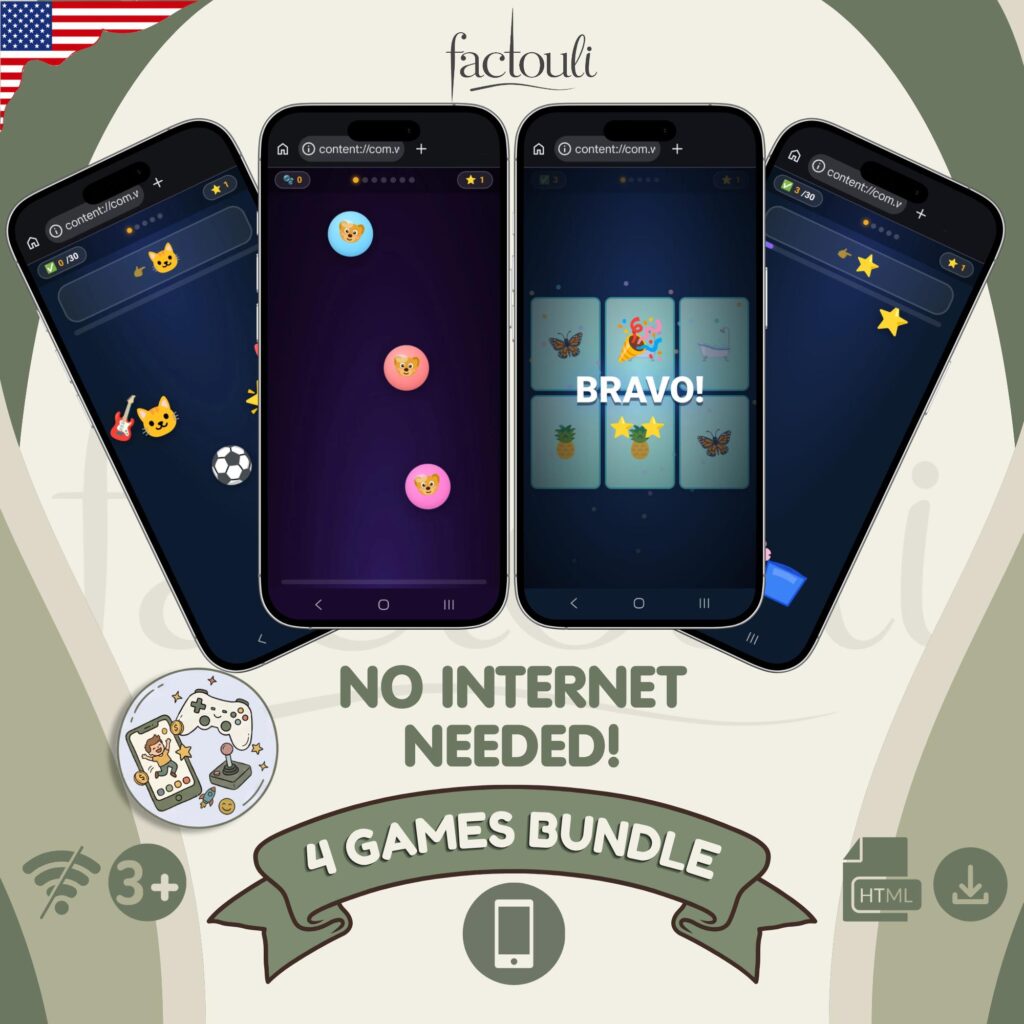
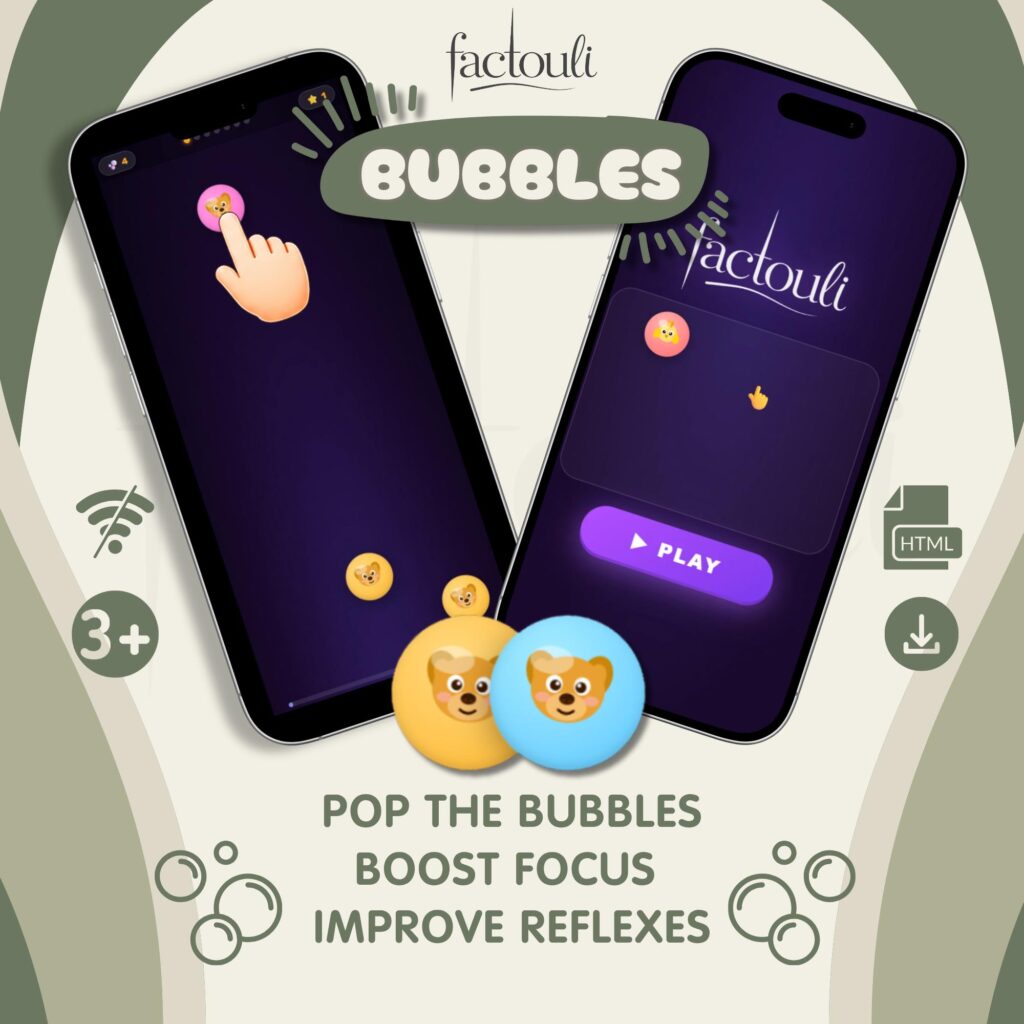
Bubbles float up and get popped. Simple enough for a three-year-old, and it sharpens reaction time and timing with every round, without anyone calling it practice.Tap it
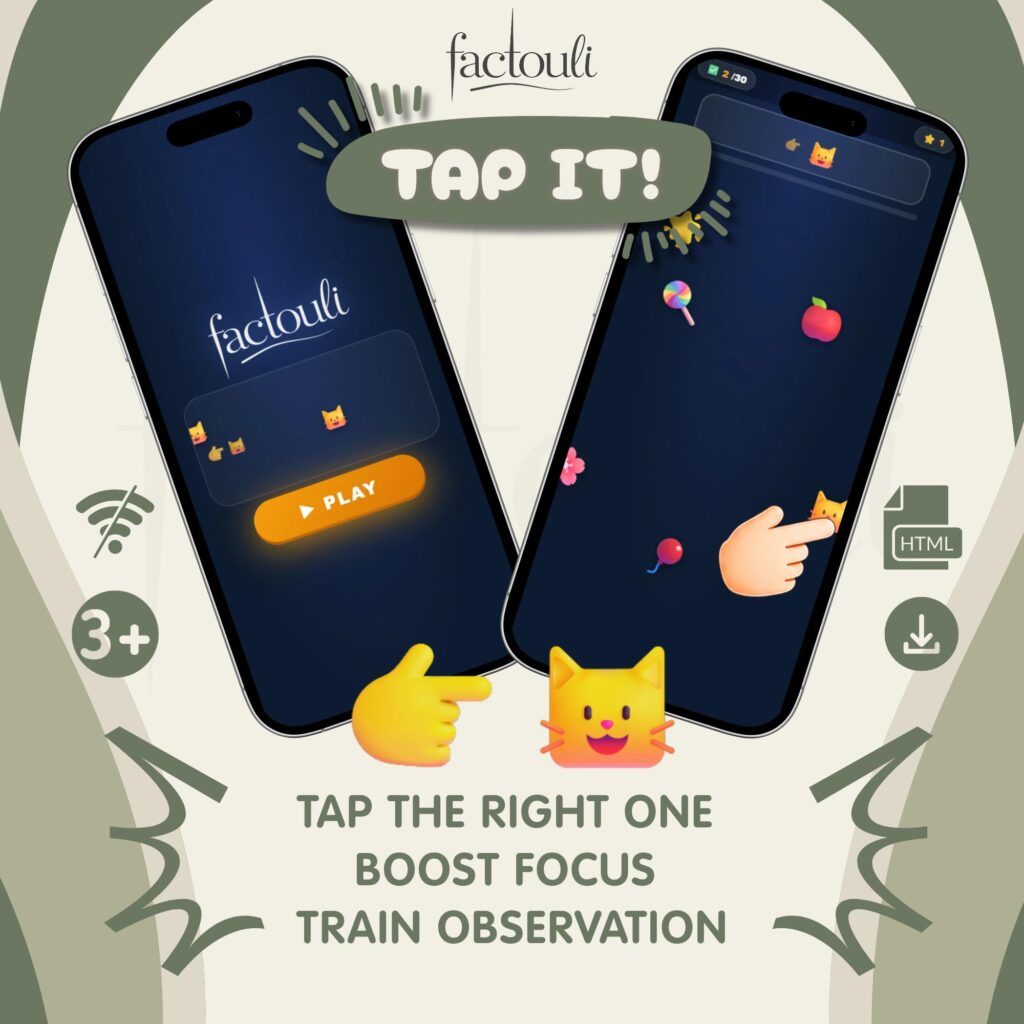
An object is named, and your child has to find it among the others and tap it. Attention and quick recognition, in a form short enough to hold a toddler’s focus.Pair up
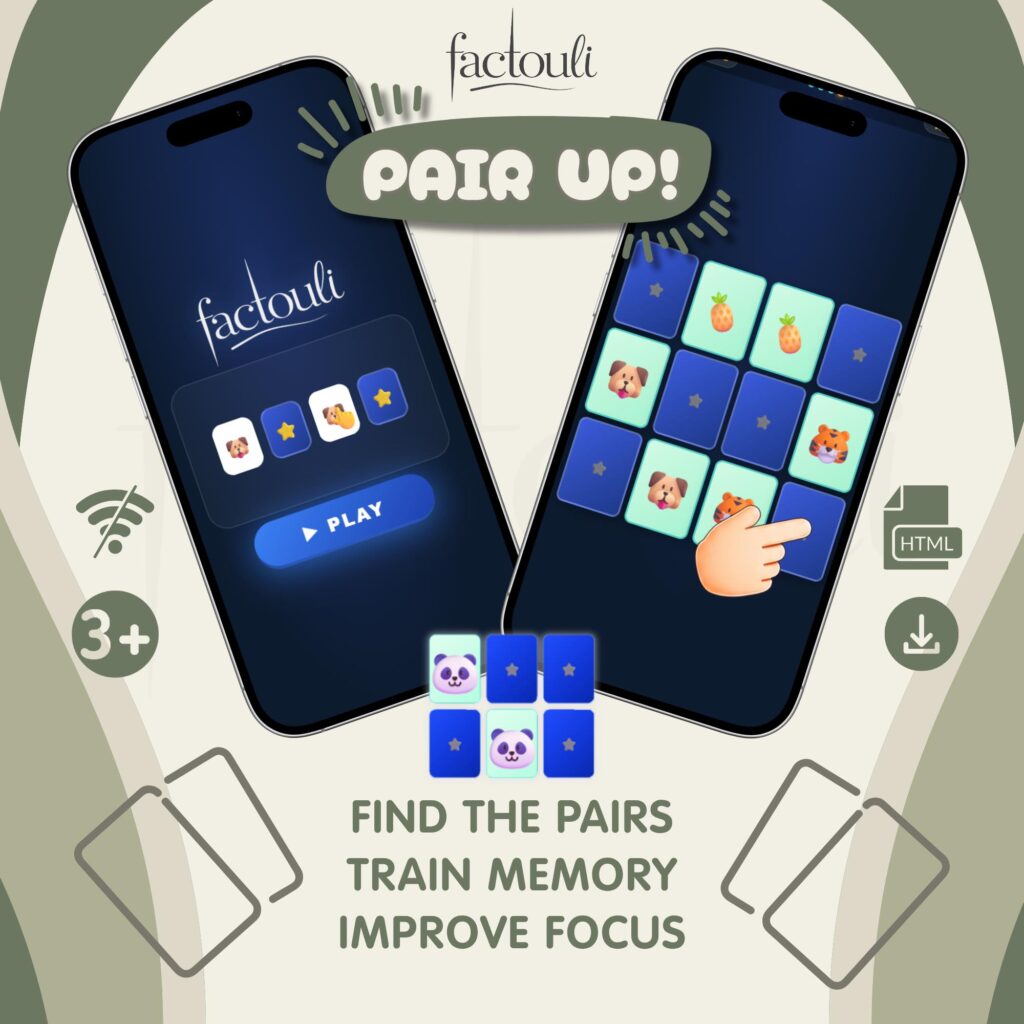
Cards face down, pairs to find. Memory games have lasted for a reason: children hold more in their head each round, and they can feel themselves getting better.Catch it
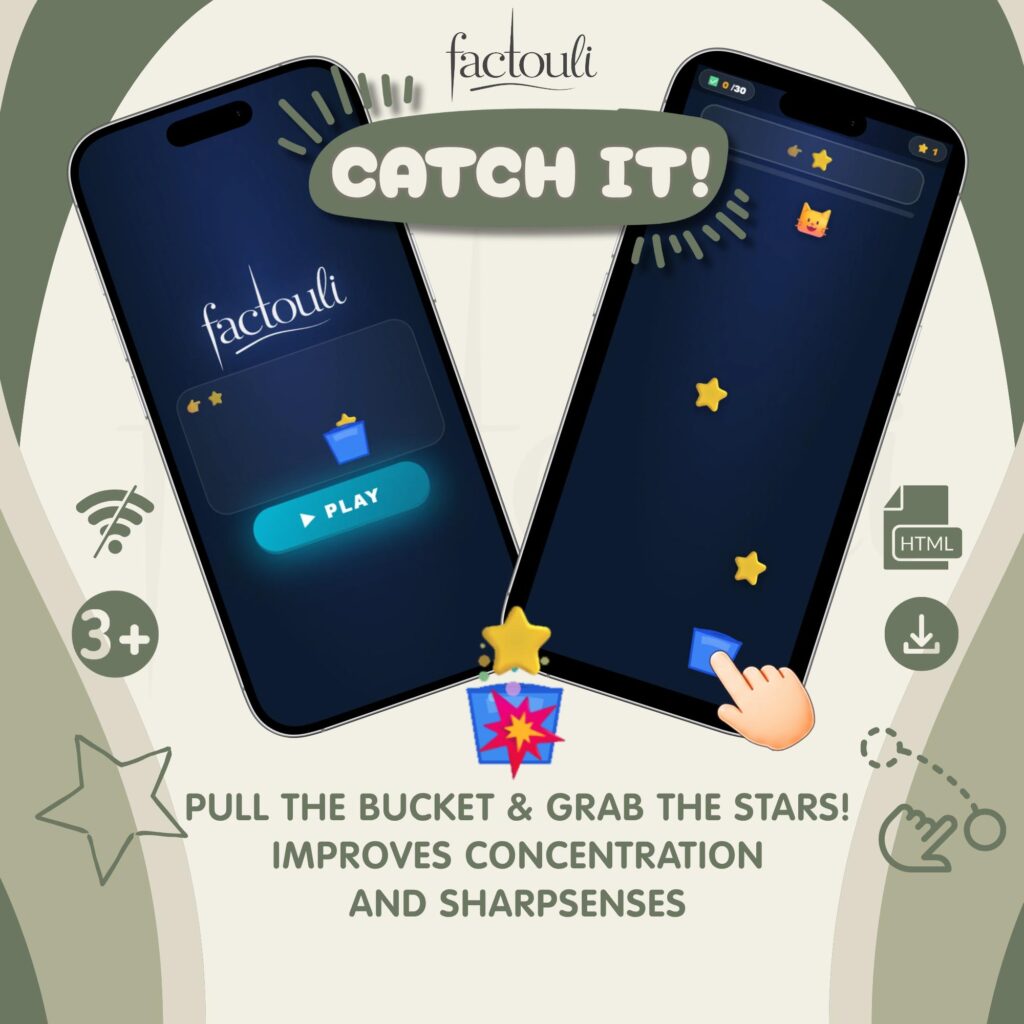
A bucket to drag left and right, and the right objects to catch as they fall. Hand and eye have to work together, which is genuinely hard at that age and improves fast with practice.Nothing has to be finished. Two minutes or twenty, it works the same either way.